
The Architecture of Dread in the High-Design Age
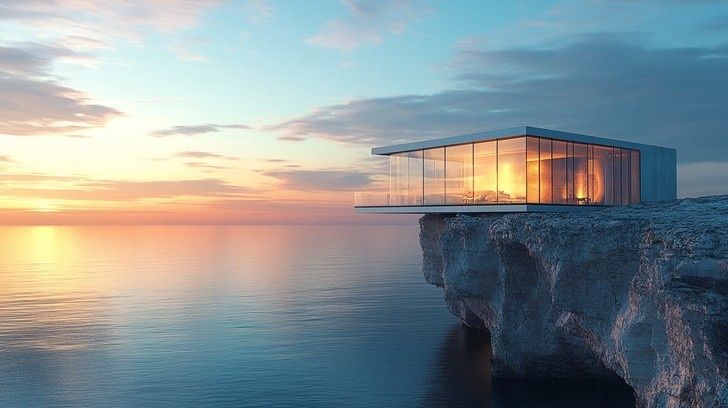
The Gothic manor once announced its menace through cracked stone, ancestral portraits, locked wings, and staircases that seemed to remember every betrayal committed upon them. Contemporary psychological suspense has not abandoned that architecture of dread. It has renovated it. The crumbling European estate has become the immaculate coastal retreat, the architectural glass box, the poured-concrete residence whose surfaces suggest control so complete that disorder should be impossible. Yet beneath the clean lines, the old anxieties remain: captivity, inheritance, secrecy, economic dependence, and the frightening possibility that the home has never belonged to the woman living inside it.
Domestic noir understands that luxury can be as oppressive as decay. Floor-to-ceiling windows eliminate the reassuring darkness of the old corridor, while polished concrete and neutral interiors deny the tactile evidence that might help a protagonist orient herself. Every surface reflects, records, or conceals. The result is a paradox of total exposure: nothing appears hidden, yet the truth remains unreachable. In a glass sanctuary, isolation becomes razor-sharp because the trapped woman can see the world beyond the walls while remaining unable to reach it, and because anyone outside may be able to watch without offering rescue.
From Ancestral Stones to Polished Concrete Floors
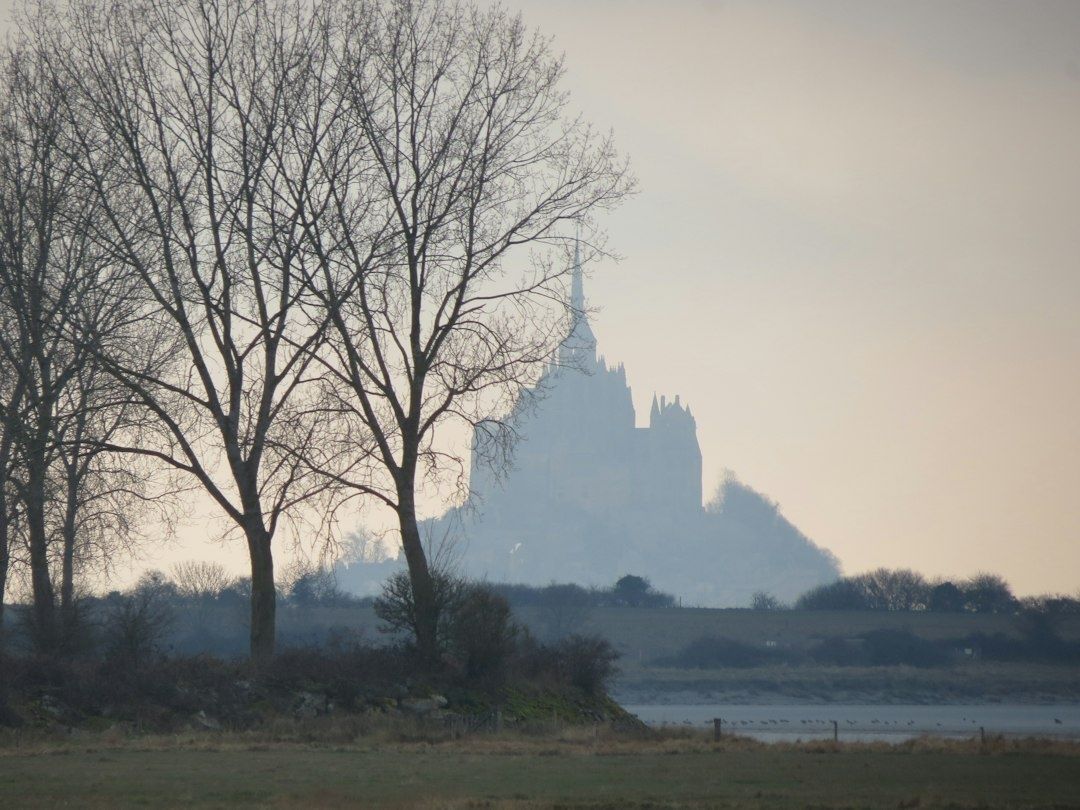
The modern glass house belongs to a long Gothic lineage. Horace Walpole”s The Castle of Otranto, generally recognized as the first Gothic novel, established a grammar in which architecture carries history and threatens the present. Ann Radcliffe refined that grammar through atmospheric landscapes, psychological uncertainty, and the “explained supernatural,” creating suspense from what a heroine cannot confidently interpret. The Gothic has always been more than a parade of ghosts. It is a form for examining how social power enters domestic space, how inherited wrongdoing survives renovation, and how a building can become an external expression of a character”s distress. A useful overview of that tradition appears in Gothic Horror: The Architecture of Dread.
What changes in contemporary domestic suspense is not the underlying machinery but the material vocabulary. The traditional castle is vertical, labyrinthine, and burdened by visible age. The modern retreat is horizontal, transparent, and apparently free of history. Its threat emerges through systems rather than superstitions, through ownership documents, surveillance networks, and carefully engineered dependence. Gothic fiction traditionally blends beauty with danger, and the contemporary minimalist house intensifies that contradiction by making beauty appear frictionless. The more perfect the setting, the more disturbing any disruption becomes.
| Classic Gothic architecture | Contemporary suspense architecture |
|---|---|
| Locked rooms and secret passageways | App-controlled locks and restricted digital access |
| Family portraits and ancestral relics | Curated photographs, biometric records, and personal data |
| Storms, ruins, and candlelit corridors | Remote coastlines, power failures, and sensor-controlled interiors |
| Inherited titles and family curses | Trust funds, property ownership, contracts, and reputational power |
Luxury minimalism also magnifies female vulnerability because it removes the visual cues associated with danger. A decaying mansion gives fear a recognizable costume. A designer residence insists that everything is safe, expensive, and professionally managed. That insistence can become a form of gaslighting. If the heroine feels watched, the architecture tells her she is merely anxious. If she cannot find a door, the floor plan suggests that she is disoriented. If she challenges the arrangement, the language of privilege turns resistance into ingratitude. The setting does not merely contain the conflict; it disciplines the protagonist”s interpretation of it.
The Digital Panopticon and Algorithmic Gaslighting
In the older Gothic, terror often arrived through a creaking door, a distant footstep, or a whisper whose source could not be identified. The smart home replaces these signs with invisible responsiveness. A lock engages without a hand touching it. The temperature changes during the night. Lights switch on in empty rooms. A speaker answers a question no one remembers asking. Such events are frightening because they are both material and deniable. The house is doing something, but the protagonist may not be able to prove that anyone is directing it.
Technology turns coercive control into an environmental condition. A partner or owner may monitor movement, alter access permissions, review intimate routines, or create a record that contradicts the protagonist”s memory. The most disturbing feature is not always the camera. It is the system”s ability to present manipulation as convenience. A door that locks “for security” and an alert that tracks a woman”s location can be framed as care. The language of wellness, protection, and efficiency gives domination a soothing interface.
- Smart locks can transform ordinary movement into permission granted or withdrawn.
- Connected thermostats and lighting systems can disrupt sleep, concentration, and bodily confidence.
- Voice assistants and security logs can manufacture an apparently objective version of events.
- Automated notifications can isolate a protagonist from outside support while appearing merely informative.
This is where domestic noir overlaps productively with science fiction and noir. Both traditions question institutions that claim to protect while quietly consolidating power. A contemporary heroine may not be pursued by a supernatural force, but she can be enclosed within an ecosystem designed by someone else. The house responds instantly, yet it does not obey her. Its intelligence becomes a form of helplessness. Every room is available to observation, while the protagonist”s own account of reality grows increasingly difficult to authenticate.
Subverting the Traditional Trappings of Female Gothic
The classic Female Gothic often places a vulnerable heroine in an isolated house controlled by a husband, guardian, aristocratic family, or mysterious benefactor. That pattern remains recognizable, but contemporary writers have complicated the blue-eyed heiress archetype. The modern heroine may be professionally accomplished, financially literate, and fully aware of the language of boundaries. She may have chosen the retreat, signed the contract, accepted the wellness program, or helped design the house. Her entrapment is therefore not a simple absence of intelligence. It is the result of power operating through choices that initially look rational.
This shift matters because contemporary domestic suspense examines the economic architecture of dependence. Financial security can be conditional. Employment can be tied to emotional compliance. A relationship can provide access to property, healthcare, status, or social legitimacy while quietly narrowing every alternative. Bespoke design becomes an instrument of control because it reflects the protagonist”s stated desires back at her. The retreat was supposed to offer rest. The home was supposed to promise freedom. The aesthetic itself becomes evidence against her when she claims that something is wrong.
The evolving tradition of the Female Gothic helps clarify why these stories remain so culturally persistent. Female Gothic narratives have long used the threatened home to examine gendered authority, marriage, confinement, and the uneasy relationship between protection and possession. Modern versions do not simply repeat the trapped-woman plot. They interrogate the social systems that make captivity appear aspirational, including beauty culture, therapeutic language, private wealth, and the expectation that women should maintain emotional order for everyone around them.
- The heroine”s apparent privilege becomes a source of suspicion rather than proof of safety.
- Domestic competence can conceal unpaid labor, emotional coercion, and surveillance.
- Wellness language can disguise obedience as healing.
- Reclaiming agency may require rejecting the identity the house was designed to produce.
The glasshouse is consequently an arena of scrutiny. The protagonist is watched by partners, systems, neighbors, readers, and sometimes by her own internalized expectations. Her body, memory, sexuality, work, and anger are all treated as evidence to be interpreted. Yet the same transparency that exposes her can become a weapon. A visible wall can shatter. A perfect surface can reveal fingerprints. A carefully controlled environment can be turned against its controller when the heroine learns to read its vulnerabilities. Violent reclamation in these narratives is not merely escape from a building. It is the refusal to remain legible according to someone else”s design.
The Harsh Edge of Untamed Coastal Landscapes
The modern Gothic house often stands at the point where design meets elemental force. Windswept cliffs, rain-heavy beaches, remote islands, and Pacific Northwest coastlines provide a severe counterpoint to fragile glass and smooth concrete. Inside, the house promises climate control and visual mastery. Outside, weather refuses both. The landscape does not need to be supernatural to feel hostile. It only needs to be vast, indifferent, and difficult to cross.
Isolation is frequently marketed as a luxury commodity. Privacy, remoteness, and distance from ordinary life are presented as cures for exhaustion. In suspense fiction, that promise mutates into a physical trap. A road floods, a storm cuts communication, or the nearest neighbor becomes too distant to reach. Environmental pressure exposes the weakness of the architectural fantasy. The glass walls tremble, the power fails, and the carefully sealed interior begins to resemble the old haunted manor, not because it has become antique, but because its inhabitants have lost the illusion of control. In stories such as Taylor Adams”s The Last Word, the rainy Washington coast turns solitude into a volatile condition, while climate-inflected fiction such as Charlotte McConaghy”s Wild Dark Shore treats remote terrain as both refuge and prison.
Shattering the Illusion of the Safe Aesthetic Enclosure
The contemporary glass sanctuary can be more terrifying than the antique haunted mansion because it refuses to admit that it is frightening. The old manor announces danger through darkness and decay. The high-design enclosure offers clean air, privacy, technology, and a view. Its menace is embedded in the promise of a better life. That promise makes resistance psychologically expensive: who will believe a woman is trapped when the house appears to represent everything she has been taught to want?
Psychological suspense remains powerful because it reveals how patriarchal oppression can disguise itself as architecture, taste, care, and investment. The most memorable modern Gothic spaces are not simply settings but arguments about ownership. Who controls the doors, the data, the money, the narrative, and the definition of safety? When a heroine begins to ask those questions, the polished surfaces lose their authority. The cage becomes visible precisely when its glamour fails.
For readers and writers, the lesson is sharply practical. A threatening house does not need a ghost, a ruin, or a family curse. It needs a promise that can be withdrawn, a system that can deny what the protagonist knows, and a beautiful enclosure whose perfection conceals an unequal distribution of power. Modern crime fiction continues to break such cages because the deepest Gothic fear is not that the walls are haunted. It is that the walls were built to keep one woman obedient, and that she may have to destroy the entire aesthetic to get out.