
Beyond the Masculine Wasteland
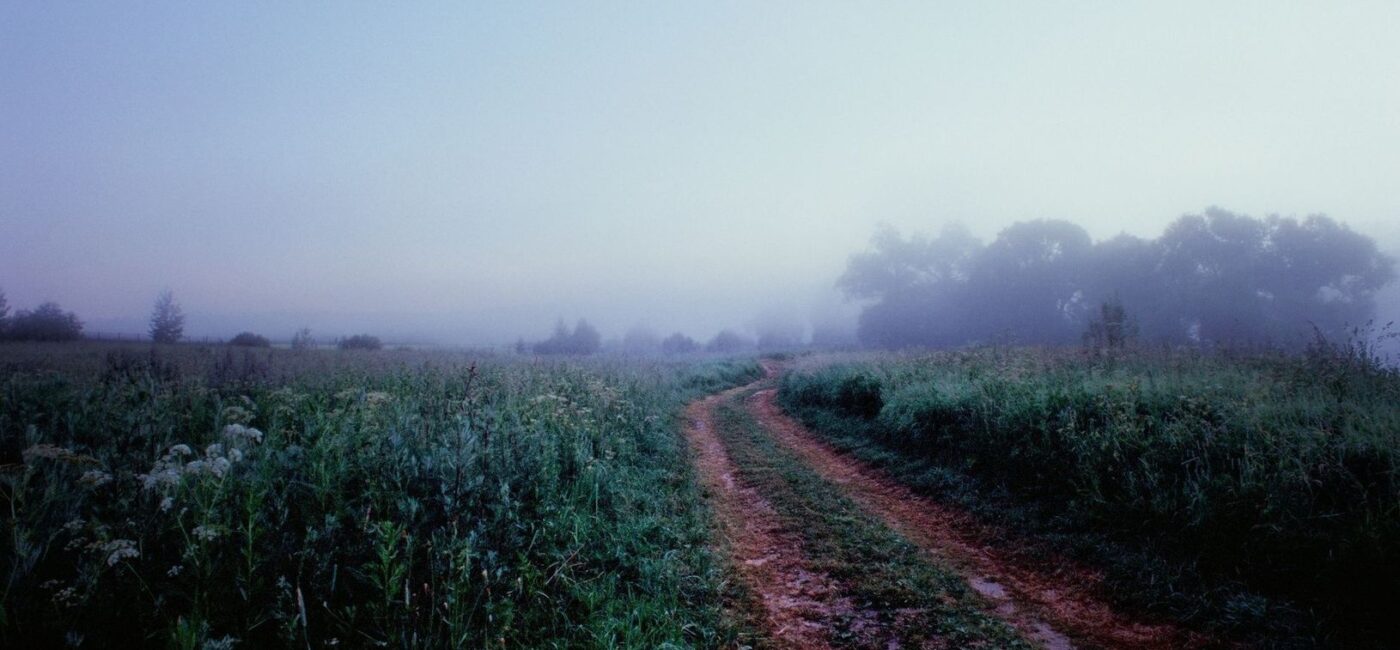
For much of its modern history, rural noir was imagined as a masculine wasteland: a hard country populated by solitary men, inherited feuds, damaged fathers, and violence treated as both language and destiny. Its landscapes were often vast, but its emotional vocabulary could be narrow. The stoic outsider crossed a county line, entered a backwoods settlement, or descended into a family secret, carrying the familiar equipment of frontier fiction: endurance, firearms, silence, and a private code of honor.
Contemporary women crime writers have not simply placed female protagonists inside that established terrain. They have altered what the terrain means. The abandoned farm, the unlit road, the hollow, and the town where everyone knows everyone are no longer passive settings for male ordeal. They become active conspirators in trauma, shaped by economic neglect, patriarchal ownership, domestic danger, and communal memory. In this expanded tradition of Southern noir and rural crime, geography is inseparable from power.
The result is a decisive movement away from frontier bravado toward the intimate mechanics of survival. A woman trapped in an isolated house may be endangered not because civilization has disappeared, but because civilization has arranged itself around her silence. A missing person case may expose not one deviant criminal, but a network of relatives, employers, neighbors, and institutions that have learned to look away. Rural geography reflects and amplifies the somatic realities of female survival: exhaustion, vigilance, injury, confinement, and the fierce intelligence required to remain alive.
Topography as Anatomy and Weapon
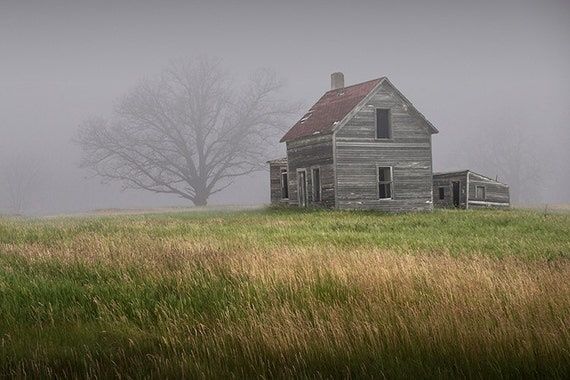
In rural noir, distance is never merely measured in miles. It is experienced as delayed emergency response, unreliable transport, weak telecommunications, scarce employment, and the knowledge that a house can be both refuge and trap. The wide horizon promises freedom to an outside observer, yet for a woman living under surveillance it may function as a carceral perimeter. Every road is known. Every vehicle is recognized. Every departure invites questions.
This is why the countryside in contemporary female crime fiction often feels bodily rather than picturesque. Forests bruise the light; fields resemble exposed skin; abandoned industrial sites carry the ache of old wounds. The landscape absorbs the marks of violence and returns them as atmosphere. What appears to be pastoral openness becomes claustrophobic because there is nowhere private to disappear and nowhere neutral to stand.
The tradition is closely related to the broader logic of noir, which is defined less by urban architecture than by entrapment, moral ambiguity, corruption, and disillusionment. As an analysis of Mare of Easttown in the M/C Journal observes, small-town noir turns apparent familiarity into pressure. The town”s visibility does not guarantee safety; it can make escape more difficult.
- Distance becomes a practical barrier to rescue and a psychological measure of abandonment.
- Visibility becomes surveillance, especially for women whose reputations are treated as communal property.
- Weather and terrain become material obstacles that test endurance rather than decorative mood.
- Inherited land becomes a record of violence, debt, ownership, and buried obligation.
Conventional pastoral fiction offers fields, seasons, and rootedness as signs of moral continuity. Rural noir distrusts that illusion. Beneath the green surface may be an unreported assault, a family debt, a contaminated waterway, or a house in which abuse has become ordinary. The land is not innocent, but neither is it simply evil. It is an archive, holding what the town refuses to name.
Kinship Ties and the Economy of Complicity
The small community is one of rural noir”s most effective inventions because intimacy can protect violence as efficiently as secrecy. Multi-generational families control property, employment, local reputation, and informal justice. A patriarch accused of abuse may be defended as a provider, a veteran, a church member, or the owner of the only business for miles. The victim, by contrast, is asked whether she misunderstood, provoked, exaggerated, or damaged the family”s standing.
These dynamics are especially stark in Appalachian settings, where fiction has often examined the convergence of poverty, inherited obligation, addiction, and geographic isolation. Works associated with Appalachian noir, including Daniel Woodrell”s Winter”s Bone and Ron Rash”s The World Made Straight, place characters inside family systems where criminality is not an exceptional intrusion but part of the local economy of survival. Contemporary women writers sharpen the gendered implications of that structure. Women may be expected to preserve the family, absorb its violence, and remain grateful for the protection that confines them.
Economic decay intensifies the trap. When work is scarce and housing is tied to kinship, leaving can mean homelessness, loss of childcare, or exposure to retaliation. Legal recourse may exist in theory while remaining unreachable in practice. A sheriff may be related to the accused. A lawyer may depend on the town”s most powerful employer. A clinic may be hours away. In such fiction, poverty is not background texture. It is an engine that converts dependence into complicity.
| Structural pressure | How it operates in rural noir | Gendered consequence |
|---|---|---|
| Family reputation | Suppresses allegations and disciplines dissent | Women are pressured to protect the household at personal cost |
| Economic scarcity | Limits work, transport, housing, and legal choices | Leaving danger becomes materially difficult |
| Institutional familiarity | Police, courts, and employers overlap with local power | Formal justice can reproduce informal hierarchies |
| Inherited land | Turns property into a source of debt and obligation | Ownership becomes conditional on obedience |
Rooted in the atmospheric dread of Southern Gothic traditions, these dynamics demonstrate how communal heritage can curdle into systematic silence. Yet the most compelling fiction does not reduce rural people to villains or victims. It shows how decent individuals accommodate cruelty in small increments, how fear becomes etiquette, and how silence can be mistaken for loyalty until the cost becomes unbearable.
Subverting the Southern Gothic Canon
The Southern Gothic has long relied on the grotesque: damaged bodies, eccentric households, religious extremity, decaying mansions, and families haunted by history. In the hands of contemporary women and queer writers, the grotesque becomes less ornamental and more political. Rage is not a decorative fever. It is an intelligible response to the social order. The monster may be a violent man, but it may also be the respectable system that enables him to continue.
This change broadens the canon”s emotional and racial field. An essay on the expanding diversity of Southern Gothic and rural noir points to writers including Jesmyn Ward, Kelly J. Ford, Wanda M. Morris, S.A. Cosby, and Eli Cranor, whose work complicates the older dominance of straight white perspectives. Such fiction insists that the South is not a single inherited story. Black, queer, poor, and otherwise marginalized characters do not merely enter an established landscape; they expose the exclusions that helped define it.
- Queer secrecy becomes both a survival strategy and a source of narrative tension.
- Female rage becomes evidence, motive, and moral knowledge rather than hysteria.
- Marginalized memory challenges official versions of family and local history.
- Competence under pressure replaces the passive victim waiting for rescue.
Queer rural life is particularly revealing because concealment can be necessary for safety while also producing isolation. Tess Sharpe”s discussion of queer women in rural noir shows how hidden relationships and divided social identities complicate both detection and survival. A concealed sexuality may protect a character from immediate suspicion, but it can also deny her access to community, language, and help. The secret is therefore morally ambivalent: shield, burden, weapon, and eventual liability.
These protagonists do not necessarily become heroic in conventional terms. They may lie, steal, manipulate evidence, or commit violence. What changes is the reader”s understanding of agency. The woman navigating the backwoods is not waiting to be purified by rescue. She is reading terrain, calculating risk, and deciding which forms of contamination are survivable.
The Anatomy of Modern Domestic Ruin
Modern rural noir is international in reach. Its emotional architecture can be found in Scottish moors, Swedish forests, British farms, Appalachian hollers, and isolated American towns. The local details differ, but the central pressures recur: a beautiful landscape conceals brutality; modern institutions thin out at the margins; and domestic space becomes the first crime scene. Swedish crime fiction, for example, frequently joins psychological violence to bleak natural settings, while Stina Jackson”s The Silver Road turns a remote road into the setting for a father”s obsessive search for his missing daughter.
The British countryside carries a similar contradiction. Its apparent tranquillity can make violence more disturbing because the landscape seems to promise order. In isolated settings, the investigator loses technological convenience and social certainty. Roads become uncertain, evidence decays, and local knowledge may be more valuable than official procedure. The rural detective story therefore stages a contest between modern systems and older forms of secrecy.
Women authors repurpose this bleakness through several precise craft strategies:
- They make domestic space legible. A kitchen, bedroom, barn, or family vehicle reveals patterns of control through objects, routines, and restricted movement.
- They distribute suspicion across the community. The question is not only who committed the crime, but who benefited from its concealment.
- They use the body as evidence. Fatigue, injury, pregnancy, hunger, and sensory memory register the costs that official investigations overlook.
- They delay catharsis without abandoning it. Recognition arrives gradually, allowing readers to understand how danger became normalized.
- They turn survival into action. Escape, testimony, retaliation, and mutual aid become forms of plot rather than afterthoughts.
Vengeance in this fiction is rarely clean. It may involve the destruction of a family name, the exposure of a local economy, or the refusal to inherit a property whose foundations are soaked in violence. The most satisfying endings do not always restore order. Instead, they reveal the price of the old order and allow a character to choose a future that is not organized around obedience.
This is where domestic ruin becomes literary catharsis. The house is not merely where the crime occurred; it is the shape of the social contract. When a protagonist tears herself away from it, she is not simply leaving a building. She is rejecting the belief that endurance requires silence, that blood creates obligation, and that survival must resemble forgiveness.
Reclaiming the Soil and the Story
Female crime novelists have permanently altered rural noir by insisting that landscape carries gendered history. The remote road, the failing town, and the inherited farm now register not only class conflict and regional decline, but the specific pressures placed on women”s bodies, labor, sexuality, and credibility. Rural darkness is no longer a stage on which masculine damage performs itself. It is a living system of power, and women”s movement through it reveals how that system works.
“Bad ground” offers narrative clarity because it makes invisible structures tangible. A locked door, a washed-out road, a missing paycheck, and a family gathering can communicate more about oppression than an abstract explanation ever could. By claiming the soil, the silence, and the story, contemporary women writers transform rural noir from a mythology of male endurance into a literature of collective reckoning. The darkest landscape then becomes something more than a prison. It becomes evidence, territory, and finally, the place from which a new account can begin.