
Beyond the Shaken Martini and the Iron Curtain
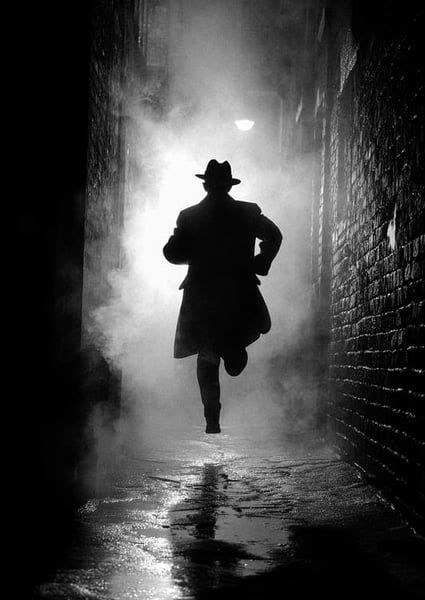
The dominant cultural image of Cold War espionage still arrives in familiar costume: the solitary man in a tailored suit, the concealed pistol, the lethal gadget, the coded rendezvous, and the glamorous escape across a border. It is a thrilling mythology, but it is also a narrow one. It treats espionage as an arena of spectacular action, where danger announces itself through explosions, pursuit, and betrayal.
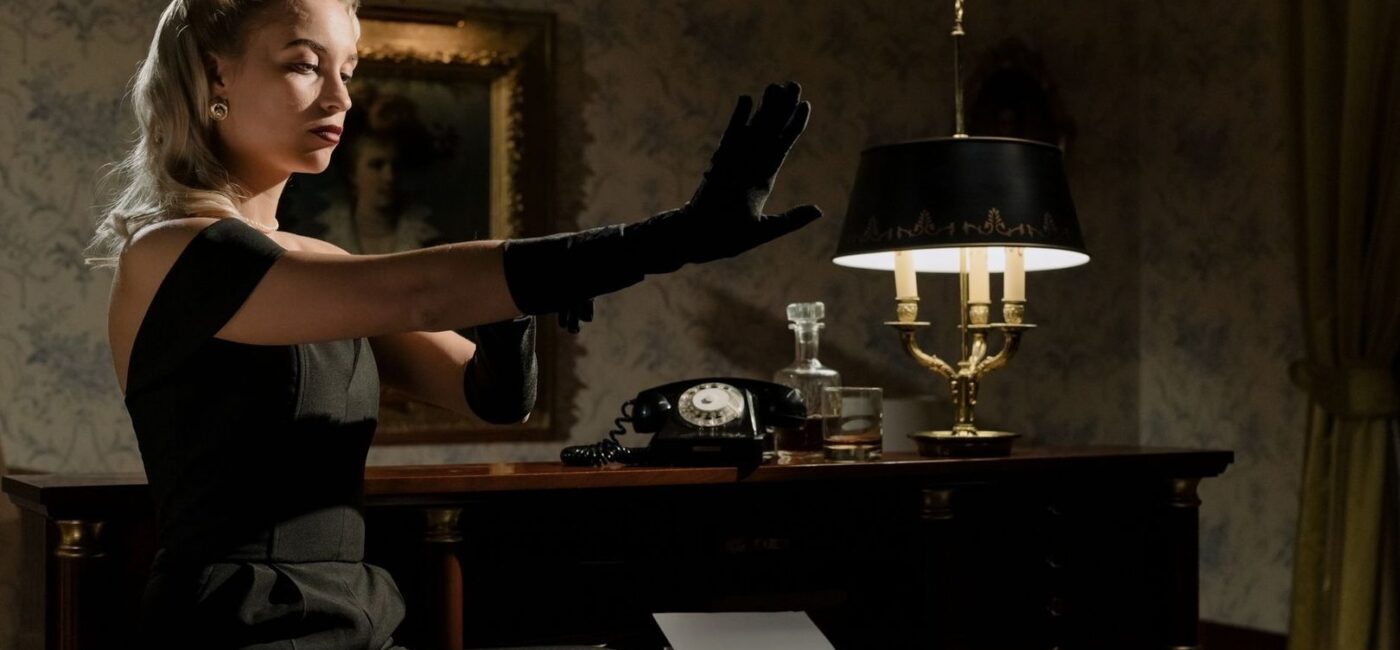
Alongside that tradition, a powerful body of fiction developed a more intimate form of suspense. Writers such as Helen MacInnes, Ann Bridge, and Martha Albrand relocated the spy thriller into drawing rooms, diplomatic households, marriage beds, hotel lounges, and apparently harmless conversations. Their intelligence work often begins before anyone admits that intelligence work is happening. A glance becomes evidence, hospitality becomes surveillance, and ordinary affection becomes a vulnerability that an enemy can exploit. These writers understood that the Cold War was not merely fought in ministries and safe houses. It entered private life, where uncertainty could corrode trust without leaving a visible wound.
Drawing Rooms and Everyday Surveillance in Helen MacInnes
Helen MacInnes established one of the clearest models for domestic intrigue in twentieth-century espionage fiction. Her first novel, Above Suspicion, appeared in 1941 and made an immediate impact, launching a career that would eventually encompass more than twenty novels. Rather than relying on invincible professionals, MacInnes frequently placed civilians in the path of political violence. Couples, academics, travelers, and other apparently unprepared figures are forced to interpret danger while continuing to perform the rituals of ordinary life.
That structure creates a distinctive kind of suspense. In MacInnes, a dinner invitation may be a test, a friendship may conceal ideological allegiance, and a sightseeing excursion may become a reconnaissance mission. The reader is asked to notice the social details that a more action-driven thriller might treat as decoration. Her international settings are carefully researched, but the geopolitical machinery matters because it presses upon individual conscience. As an authoritative biography of Helen MacInnes records, her fiction embedded political crises in credible civilian lives while returning repeatedly to freedom, loyalty, moral courage, and individual dignity.
MacInnes”s moral architecture is equally important. Her protagonists are not usually cynical operators who regard treachery as a professional inconvenience. They are people who must decide what responsibility means when every available choice carries risk. In The Venetian Affair, The Salzburg Connection, Decision at Delphi, and The Double Image, political conspiracies become tests of character as much as contests of intelligence. The restrained violence of her fiction does not reduce its danger. Instead, it sharpens the threat by making the consequences feel plausible and personal.
- Domestic space becomes an intelligence environment rather than a refuge from politics.
- Conversation functions as interrogation, with tone and omission carrying as much weight as information.
- Amateur protagonists reveal how ordinary citizens can be drawn into systems they barely understand.
- Moral choice replaces professional bravado as the central measure of courage.
This approach also explains MacInnes”s unusual position in the genre. Her books could offer adventure, romance, travel, and political suspense, yet they resisted the fantasy that espionage leaves the self untouched. Intelligence professionals reportedly admired the practical credibility of her work, and Assignment in Brittany was used in wartime intelligence training. The thrill comes not from pretending that fear can be mastered, but from watching people act ethically while fear remains present.
Diplomatic Teas and Covert Realities with Ann Bridge
Ann Bridge brought an unusually intimate knowledge of official life to her fiction. Writing under the name Ann Bridge, Mary Dolling Sanders O”Malley drew on her experience as the wife of a British diplomat, and that background gave her novels a sharp understanding of diplomatic environments. Protocol, social obligation, and cultivated charm are not merely atmospheric features in her work. They are working parts of the plot, capable of concealing information as effectively as any false document.
Her Julia Probyn novels demonstrate how an apparently amateur investigation can move through complicated political terrain. In The Lighthearted Quest, the first of eight Julia Probyn novels, Julia travels to French Morocco to search for her missing cousin. The investigation carries her through Casablanca, Tangier, Fez, and Marrakech, where antique dealers, smugglers, archaeologists, spies, and secret-service agents occupy the same crowded social landscape. The story combines travel writing, humor, romance, mystery, and political tension, but its most revealing feature is the way Julia operates without the protection of official status.
Bridge understood that diplomatic life depends on performance. A hostess must remain gracious while assessing a guest. A conversation about food, weather, or local custom may create the opportunity to exchange a warning. A party can become a field of observation in which everyone is both audience and actor. Drawing directly on her life as the wife of a British diplomat, Ann Bridge”s biographical record helps explain the acute attention her fiction gives to geopolitical borderlands and the social codes that govern them.
Julia”s strength does not derive from technological superiority or institutional authority. It comes from composure, cultural attentiveness, and the ability to move through rooms where men with formal power underestimate her. That does not make the world harmless. Bridge”s fiction also carries the colonial assumptions of its period, and modern readers should remain alert to the racist and paternalistic attitudes that can shape its descriptions. Yet those limitations make the books historically revealing as well as entertaining. They show how women could be granted access to social spaces while still being denied recognition as political actors.
The result is espionage conducted through texture rather than spectacle. Landscapes, customs, meals, architecture, and manners establish the conditions under which information can travel. The parlour is never simply a parlour. It is a controlled environment in which status, discretion, and curiosity determine who sees what, and who is permitted to ask questions.
Martha Albrand and the Lingering Scars of Identity
Martha Albrand brought the experience of European exile into the emotional structure of the spy novel. Where some thrillers treat displacement as a route to adventure, Albrand treats it as a permanent disturbance in the self. The émigré, the refugee, and the suspected double are not merely figures moving between countries. They are people whose identities have been altered by political catastrophe and by the knowledge that belonging can be revoked.
This changes the central question of espionage. Instead of asking only who possesses the secret or which side will win, Albrand”s fiction asks what secrecy does to the person required to maintain it. A double life is not simply an ingenious plot device. It creates emotional fracture. Every relationship becomes provisional, every confession potentially dangerous, and every act of trust shadowed by the possibility that the self being offered is incomplete.
- Identity becomes unstable, shaped by exile, disguise, memory, and political allegiance.
- Secrecy becomes psychological pressure, not merely a professional requirement.
- Survival carries an emotional cost, particularly when loyalty conflicts with love or personal history.
- The spy becomes a survivor, often dislocated from the society the mission is supposed to protect.
That emphasis anticipates the modern literary thriller”s interest in divided consciousness. Contemporary espionage fiction often treats deception as an intimate condition, one that alters memory, desire, and the ability to interpret other people. Literary thrillers such as The Sympathizer, Restless, and Transcription continue to explore the mole, the compromised agent, and the covert worker as psychologically divided figures rather than frictionless instruments of the state. The genre”s most compelling secrets are increasingly carried inside the character.
Albrand”s importance lies in this movement from external enemy to internal aftermath. The danger is not only arrest, torture, or exposure. It is the possibility that constant concealment will make ordinary intimacy impossible. Her spies are not invulnerable symbols of statecraft. They are emotionally dislocated people trying to inhabit a world in which truth has become both necessity and threat.
Divergent Arenas of Espionage Storytelling
The contrast between masculine action traditions and these women”s approaches should not be reduced to a simple opposition between violence and gentleness. MacInnes, Bridge, and Albrand all write about genuine peril. Their innovation lies in changing where peril is located and how it becomes legible. As later criticism of women in espionage fiction has noted, the genre historically marginalized both women writers and women as autonomous subjects, despite the existence of major popular figures such as MacInnes. The alternative tradition therefore matters not because it is less thrilling, but because it expands the field of what suspense can reveal.
| Genre mechanism | Conventional action emphasis | Women”s mid-century intervention |
|---|---|---|
| Primary setting | Safe houses, borders, ministries, and battle zones | Homes, hotels, diplomatic gatherings, and social interiors |
| Source of tension | Gadgets, pursuit, violence, and operational failure | Observation, uncertainty, divided loyalty, and emotional exposure |
| Protagonist | Professional operative with specialized skills | Civilian, amateur investigator, displaced person, or socially underestimated woman |
| Pacing | Rapid escalation toward a mission or confrontation | Accumulation of suspicion through conversation, silence, and delayed recognition |
| Resolution | Capture, escape, assassination, or mission success | Moral choice, damaged trust, compromised identity, or survival with consequences |
These differences also expose the blind spots of the older formula. A gadget can solve an immediate tactical problem, but it cannot explain why a marriage has become uninhabitable. A dramatic border crossing can externalize danger, but it cannot fully capture the terror of realizing that a trusted guest has been reporting on a household. Domestic surveillance makes power harder to locate. It moves through servants, spouses, hosts, neighbors, colleagues, and friends, all of whom may possess fragments of a larger design.
Reclaiming the Quiet Architects of Modern Suspense
Mid-century women writers did not produce minor side stories to the supposedly central history of espionage. They constructed a psychological blueprint that contemporary literary thrillers still use. Their work demonstrated that suspense can grow from moral hesitation, social performance, and the slow contamination of private life. The most dangerous question is often not whether a character can escape, but whether the character can still recognize the people closest to them.
That legacy makes these novels essential reading for anyone interested in Cold War cultural memory. They reveal how ideology entered the home, how gender shaped access to authority, and how women writers found narrative power in spaces the genre had treated as decorative. The parlour, in their hands, becomes an instrument of detection. A cup of tea can mark allegiance. Politeness can conceal coercion. Silence can carry the force of an accusation.
Readers approaching this tradition should begin with Above Suspicion for its fusion of ordinary marriage and political danger, continue to The Venetian Affair for a more explicitly Cold War atmosphere, and seek out The Lighthearted Quest for its mixture of travel, diplomacy, and amateur investigation. Albrand offers a darker route into the genre, one concerned with exile, damaged identity, and the cost of living behind a constructed self. Together, these writers make visible the quiet architects of modern suspense, authors who understood that the private sphere was never separate from the state, and that the softest room in the house might contain the sharpest threat.